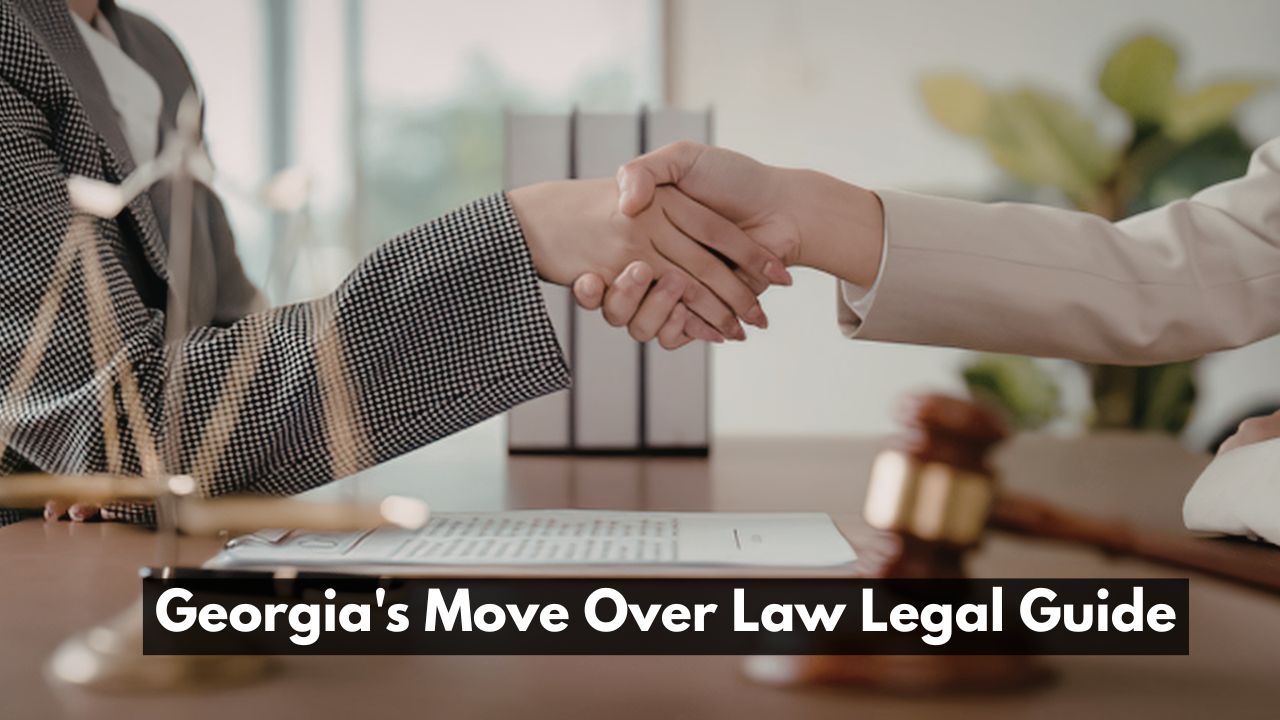
Georgia’s Move Over Law Legal Guide
Driving through Georgia can feel like a mix of speed, pressure, and constant movement. Highways are busy, and roadside activity is common. In this flow of traffic, safety can easily be forgotten. That is exactly why Georgia’s Move Over Law: A Legal Guide matters so much for every driver, whether local or passing through.
This law is not just a rule written on paper. It is a life-saving requirement designed to protect people working inches away from fast-moving cars. Police officers, tow truck drivers, and emergency responders risk their lives every day on the roadside. One distracted moment from a driver can turn a routine stop into a tragedy.
In this first part of Georgia’s Move Over Law: A Legal Guide, we will break down what the law means, why it exists, and how it works in real driving situations. Think of it as a simple roadmap to help you stay safe and avoid legal trouble.
What Is Georgia’s Move Over Law?
At its core, Georgia’s Move Over Law: A Legal Guide refers to O.C.G.A. §40-6-16. It requires drivers to take action when they approach stopped emergency or service vehicles with flashing lights.
The rule is simple in theory:
- Move over one lane when possible
- If you cannot move over safely, slow down significantly
This law applies only when the vehicle is stationary and clearly marked with flashing lights. It is designed to create a buffer zone between moving traffic and roadside workers.
Many drivers assume this is optional or situational, but it is not. It is a legal duty. Ignoring it can lead to fines, points on your license, and even criminal charges in serious cases.
Why the Law Exists
The purpose of Georgia’s Move Over Law: A Legal Guide is deeply human. It is built on real accidents and real loss. Roadside workers often stand just a few feet from vehicles moving at highway speed. That is extremely dangerous.
Imagine standing next to a river of fast-moving cars while doing your job. One small mistake from a driver can have fatal results. This law acts like a protective shield for those workers.
It helps:
- Reduce roadside injuries and deaths
- Protect emergency responders during critical work
- Improve awareness among drivers
- Create safer highway environments
This is not just about avoiding tickets. It is about respecting human life on the road.
Read more: What Does an AV Rating Mean?
Who Is Protected Under the Law?
One of the key parts of Georgia’s Move Over Law: A Legal Guide is understanding who it protects. Many people think it only applies to police cars, but it is much broader.
Protected vehicles include:
- Police vehicles
- Fire trucks
- Ambulances
- Tow trucks
- Recovery and wrecking vehicles
- Utility service vehicles (electric, water, gas, cable)
- Department of Transportation vehicles
- HERO (Highway Emergency Response Operators) units
If these vehicles are stopped with flashing lights, they fall under the protection of this law.
How Drivers Are Expected to Respond
Understanding action steps is the heart of Georgia’s Move Over Law: A Legal Guide. When you see a qualifying vehicle stopped ahead, you must react quickly but safely.
You have two main options:
1. Move Over
If there is a safe lane available, you must change lanes away from the stopped vehicle. This creates physical distance and reduces risk.
2. Slow Down
If traffic or road conditions prevent lane change, you must reduce your speed significantly. You should also be ready to stop if needed.
This flexibility is important because roads are not always predictable. The law recognizes that safety comes first.
Key Conditions of the Law
To understand Georgia’s Move Over Law: A Legal Guide clearly, it helps to know when it applies and when it does not.
The law applies when:
- A vehicle is stopped on the roadside
- The vehicle displays flashing lights
- The vehicle is an emergency or service vehicle
The law does NOT apply when:
- The vehicle is moving
- No flashing lights are present
- There is no roadside emergency situation
These details matter because they define whether a driver is legally required to act.
Quick Summary Table
Here is a simple breakdown to make Georgia’s Move Over Law: A Legal Guide easier to understand:
| Situation on Road | Driver Requirement |
|---|---|
| Emergency vehicle stopped with lights | Move over or slow down |
| Lane available | Move over one lane |
| No lane available | Slow down significantly |
| No flashing lights | No special action required |
| Vehicle moving | Normal driving rules apply |
This table helps drivers make fast decisions under pressure.
Real-World Driving Challenges
On paper, the law sounds simple. In real life, it can be tricky. That is where Georgia’s Move Over Law: A Legal Guide becomes more practical than theoretical.
Drivers often face:
- Heavy highway traffic with no lane space
- Sudden appearance of stopped vehicles
- Confusion in multi-lane roads
- Fast-moving traffic behind them
In such situations, the law expects reasonable judgment. If you cannot move over safely, slowing down becomes the most important step.
Law enforcement also considers road conditions when evaluating compliance. This means context matters, not just action.
Enforcement and Early Penalties
Violating Georgia’s Move Over Law: A Legal Guide can lead to serious consequences. Police officers take these violations seriously because they directly impact safety.
Common penalties include:
- Traffic fines
- Points on driving record
- Increased insurance costs
- Possible court appearance
If a violation leads to an accident, penalties can become much more severe. In serious injury cases, charges may escalate to criminal offenses.
Even a single mistake can stay on your driving record for years. That is why awareness is so important.
First Look at Legal Interpretation
One of the most complex parts of Georgia’s Move Over Law: A Legal Guide is how it is interpreted. The law uses terms like “significantly reduce speed,” which can feel unclear.
This is where officer judgment plays a role. What feels like a safe slowdown in one situation may not be enough in another. Courts often review:
- Traffic conditions
- Driver behavior
- Road layout
- Reaction time
This flexibility helps the law work in real-world conditions but can also create disputes.
Early FAQs
1. Does the Move Over Law apply on all roads?
Yes, it applies on highways and local roads whenever qualifying vehicles are stopped with flashing lights.
2. What if I cannot move over safely?
You must slow down significantly and stay alert until you pass the stopped vehicle.
3. Is this law strictly enforced?
Yes. Police actively monitor compliance because it directly affects roadside safety.
Understanding Legal Nuances in Real Traffic Situations
The truth about Georgia’s Move Over Law: A Legal Guide is that most drivers do not struggle with the idea itself. They struggle with real road conditions. Traffic is not predictable. One moment you have space, and the next moment you are boxed in by cars on all sides.
This is where the law becomes less about theory and more about judgment. The rule says “move over or slow down,” but the road decides what is possible. That gap between rule and reality is where confusion often begins.
For example, on a busy highway in Atlanta or even a smaller multi-lane road, changing lanes instantly may not be safe. A sudden lane shift can cause another crash. In those cases, slowing down becomes the safer legal option.
What “Significantly Reduce Speed” Really Means
One of the most debated parts of Georgia’s Move Over Law: A Legal Guide is the phrase “significantly reduce speed.” The law does not give an exact number. That can feel frustrating for drivers who want clear rules.
In practice, it depends on:
- Current traffic speed
- Weather conditions
- Road visibility
- Distance from the stopped vehicle
A safe slowdown is not just tapping the brake. It means easing off the gas early, maintaining full control, and preparing to stop if needed.
Think of it like approaching a school zone suddenly appearing on a highway. You do not just slow slightly. You adjust fully to the new risk level.
How Police Evaluate Compliance
Law enforcement officers have discretion when enforcing Georgia’s Move Over Law: A Legal Guide. This means they look at the situation as a whole, not just one action.
They may consider:
- Whether you had space to move over
- How quickly you reacted
- Whether you reduced speed early enough
- Traffic density around your vehicle
This is important because two drivers in the same situation may be treated differently based on behavior. One may clearly slow down early, while another reacts too late.
That difference often decides whether a warning or a ticket is issued.
Common Mistakes Drivers Make
Many violations happen not because drivers ignore the law, but because they misunderstand it. Georgia’s Move Over Law: A Legal Guide highlights several common mistakes that lead to tickets.
These include:
- Only slowing slightly instead of reducing speed meaningfully
- Failing to notice utility vehicles with flashing lights
- Assuming the law applies only to police cars
- Changing lanes too late and cutting off traffic
- Distracted driving during roadside encounters
These mistakes often happen in seconds. That is why awareness is more powerful than reaction after the fact.
Penalties for Violating the Law
Violating Georgia’s Move Over Law: A Legal Guide can be more serious than a standard traffic ticket. The state treats it as a safety violation, not just a driving error.
Possible consequences include:
- Monetary fines
- Points added to your driving record
- Higher insurance premiums
- Mandatory court appearances in some cases
If the violation results in injury or death, the situation becomes much more severe. Charges can escalate into criminal liability depending on the circumstances.
The cost of one mistake can follow a driver for years, especially when insurance rates increase.
When a Ticket Can Be Challenged
Not every ticket under Georgia’s Move Over Law: A Legal Guide is final. Drivers do have the right to challenge it in court. However, success depends on evidence and circumstances.
You may have a strong defense if:
- You had no safe space to change lanes
- Traffic conditions made movement unsafe
- You significantly reduced speed as required
- The stopped vehicle was not clearly marked
- Visibility was poor due to weather or road design
The key is showing that you acted reasonably under pressure, not recklessly.
Evidence That Can Help Your Case
If you decide to fight a ticket, evidence becomes your strongest tool. Courts rely on facts, not assumptions.
Helpful evidence includes:
- Dashcam footage
- Traffic camera recordings
- Witness statements from passengers or nearby drivers
- GPS or speed data (if available)
- Photos of road conditions
Even small details can help build a clear picture of what really happened. The goal is to show that your actions matched what a careful driver would do in the same situation.
Defense Strategy in Simple Terms
A strong defense under Georgia’s Move Over Law: A Legal Guide usually focuses on one of two arguments:
1. You complied with the law
This means you either moved over safely or slowed down appropriately based on conditions.
2. Compliance was not safely possible
This means traffic, road design, or safety risks prevented you from changing lanes, so you reduced speed instead.
Courts understand that driving is not perfect. The question is whether your actions were reasonable, not flawless.
Why Legal Help Can Make a Difference
Traffic law may look simple, but courtroom procedures are not. This is where many drivers feel overwhelmed when dealing with Georgia’s Move Over Law: A Legal Guide violations.
An experienced attorney can:
- Analyze whether the stop was legally valid
- Review officer observations
- Challenge weak or unclear evidence
- Negotiate reduced penalties
- Represent you in court hearings
Sometimes, what looks like a strong case for the state can weaken under proper legal review.
Role of Experienced Traffic Attorneys
Attorneys who regularly handle cases under Georgia’s Move Over Law: A Legal Guide understand how local courts interpret these situations. They know what judges and prosecutors look for.
A skilled lawyer can:
- Identify technical errors in the citation
- Highlight reasonable driver behavior
- Present evidence in a structured way
- Argue for dismissal or reduction of charges
In many cases, legal representation can mean the difference between a heavy penalty and a reduced outcome.
Practical Driving Tips to Stay Compliant
Avoiding violations is always easier than fighting them. Here are simple habits that align with Georgia’s Move Over Law: A Legal Guide:
- Scan the road ahead every few seconds
- Watch for flashing lights early
- Move left when you see stopped vehicles far ahead
- Slow down early instead of last-minute braking
- Avoid distractions like phones in work zones
These habits become automatic with practice. Over time, they reduce both legal risk and accident risk.
Everyday Road Awareness Matters
The spirit behind Georgia’s Move Over Law: A Legal Guide is awareness. It is not just about rules. It is about respecting the fragile space where people work next to fast traffic.
A tow truck operator helping a stranded driver is vulnerable. A police officer writing a ticket is exposed. A utility worker fixing a broken line is focused on their job, not passing cars.
Your awareness creates their safety buffer. That small change in driving behavior can save lives without slowing down your day.
Frequently Asked Questions (FAQs)
1. Does the Move Over Law apply at night only?
No. It applies at all times, day or night, whenever qualifying vehicles are stopped with flashing lights.
2. What if traffic is too heavy to change lanes?
You must slow down significantly and proceed with caution until you pass the vehicle.
3. Can I get a ticket even if I slowed down?
Yes, if the officer believes the slowdown was not significant enough based on conditions.
4. Does it apply to motorcycles or bicycles?
No, it mainly applies to emergency, towing, utility, and service vehicles with flashing lights.
5. Will one violation affect my insurance?
Yes, points on your license can increase insurance premiums over time.
6. Can a Move Over ticket be dismissed?
Yes, depending on evidence and circumstances, it can be reduced or dismissed in court.
7. Is this law the same in every U.S. state?
No, each state has its own version, but the core idea of protecting roadside workers is similar.
Final Thoughts
At its heart, Georgia’s Move Over Law: A Legal Guide is not just about avoiding fines. It is about building a safer driving culture where roadside workers are not forced to risk their lives because of passing traffic.
Every time you move over or slow down, you are creating space for someone doing a dangerous job. That small action carries more impact than most drivers realize.
If you understand the law and apply it consistently, you protect others and protect yourself from legal trouble at the same time.