Master the Art of Government: A Path to Principled Leadership in Modern Politics
Learning to Master the Art of Government is not just about studying laws or memorizing political systems. It is about understanding people, power, responsibility, and justice in a deep and practical way. In today’s fast-changing world, many feel that government has lost its moral direction. This creates a strong need for leaders who think clearly and act with principle.
If you have ever looked at politics and thought, “There must be a better way,” you are not alone. Many students and professionals are now seeking serious education in public leadership. One such pathway is offered in Washington, D.C., where students can study government in the heart of American politics while building real-world leadership skills.
This article explores how you can Master the Art of Government through disciplined study, practical exposure, and a strong foundation in civic philosophy.
Understanding What It Means to Master Government
To truly Master the Art of Government, you must first understand what government really is. It is not just a system of rules. It is a living structure that shapes society, liberty, and opportunity.
Government affects everything—from education and economy to freedom and justice. When studied deeply, it becomes clear that good governance requires more than technical knowledge. It demands wisdom, restraint, and moral clarity.
At its core, Master the Art of Government means learning how to:
- Protect liberty while maintaining order
- Balance power with responsibility
- Understand history to avoid repeating mistakes
- Make decisions that serve the public good
- Think beyond personal or political gain
These principles form the foundation of strong leadership in public service.
Why Modern Society Needs Principled Statesmen
In today’s world, political systems often feel divided and reactive. Many people feel disconnected from decision-makers. This gap creates confusion and mistrust.
This is why the idea of Master the Art of Government is so important now. Society needs leaders who are not only skilled but also principled.
A principled statesman is someone who:
- Thinks long-term instead of chasing short-term gains
- Values truth over popularity
- Understands constitutional principles
- Respects the limits of power
- Works for unity instead of division
Without these traits, governance becomes unstable. With them, societies grow stronger and more peaceful.
Learning these values is not automatic. It requires structured education and serious reflection.
Studying Government in the Heart of Washington, D.C.
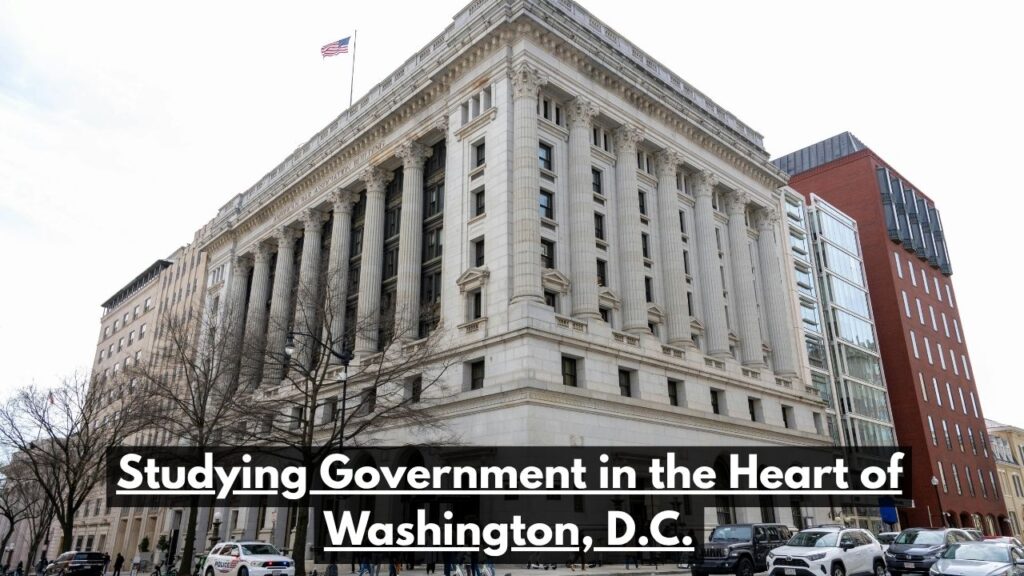
One of the most effective ways to Master the Art of Government is by studying in Washington, D.C., where political decisions shape the entire nation.
In this environment, students are not far from real political activity. They are surrounded by institutions, debates, and policy discussions that shape daily life in the United States.
A unique graduate-level program in this setting focuses on teaching the arts of liberty—the timeless ideas that support free and just societies. Students explore political theory, constitutional principles, and public leadership.
The program is designed for working adults and young professionals who want to grow without leaving their careers behind. Evening and weekend classes make it flexible and accessible.
This balance of theory and real-world exposure helps students Master the Art of Government in a practical and meaningful way.
Key Features of a Modern Government Leadership Program
A strong academic program in public leadership is built on both structure and flexibility. It prepares students for real challenges in policy and governance.
Here is a simple breakdown of what such a program often includes:
| Feature | Description |
|---|---|
| Flexible Schedule | Evening and weekend classes for working professionals |
| Location Advantage | Learning in Washington, D.C., near political institutions |
| Focus on Liberty | Study of constitutional and political philosophy |
| Leadership Training | Development of ethical decision-making skills |
| Scholarship Support | Financial aid, often covering most or all tuition |
These features are designed to help students Master the Art of Government without putting their careers on hold.
The Core Philosophy: Liberty and Responsibility
At the heart of learning to Master the Art of Government is the concept of liberty. But liberty is not just freedom to do anything. It also includes responsibility.
Good government protects freedom while ensuring order. It respects individual rights but also serves the common good.
Students studying this field often explore questions like:
- What is the purpose of government?
- How should power be limited?
- What makes laws just or unjust?
- How can leaders remain accountable?
These questions are not simple. But they are necessary for anyone who wants to lead in public life.
Understanding these ideas helps students develop a deeper moral compass for decision-making.
Building Leadership Skills for Public Service
To Master the Art of Government, students must also develop practical leadership skills. Knowledge alone is not enough. Action matters.
Key skills include:
- Critical thinking and analysis
- Public communication and debate
- Ethical decision-making
- Policy evaluation
- Strategic problem-solving
These skills prepare students for careers in public policy, law, administration, and civic leadership.
A strong program does not just teach theory. It trains students to think clearly under pressure and act with integrity in real-world situations.
This is what separates ordinary education from true leadership training.
Read More: What Is the Window Tint Law in Tennessee?
Scholarships and Accessibility
One important aspect of studying government at an advanced level is affordability. Many programs in this field offer strong financial support.
In some cases, admitted students receive scholarships that significantly reduce or even fully cover tuition costs. This makes it easier for passionate individuals to pursue their goals without overwhelming financial pressure.
This support system ensures that more people can Master the Art of Government, regardless of their financial background.
Education becomes not just a privilege, but an opportunity for those committed to public service.
A Student’s Perspective: A Real-Life Reflection
Imagine a young professional working in a city office. Every day, they see how policies affect real people—housing costs, education quality, and local services.
They start asking deeper questions. Why are these decisions made this way? Could they be improved?
This curiosity leads them to pursue graduate studies in government. As they learn, they begin to see patterns in history and politics. They understand not just what happens, but why it happens.
Slowly, they begin to Master the Art of Government, not as a slogan, but as a way of thinking.
This transformation is what many students experience when they commit to serious study in this field.
The Role of Location in Political Learning
Studying in Washington, D.C. adds a unique dimension to education. It is not just a city. It is the center of national decision-making.
Being near institutions, policy discussions, and historical landmarks gives students a deeper sense of connection to their studies.
This environment helps students Master the Art of Government by connecting theory with real-world governance.
They can observe how ideas discussed in class appear in real political debates and decisions. This connection strengthens understanding and motivation.
First FAQs (Part 1)
1. What does it mean to Master the Art of Government?
It means learning how to understand, analyze, and practice governance with wisdom, responsibility, and respect for liberty. It combines theory with leadership skills.
2. Who should study government at the graduate level?
Working professionals, students of political science, and anyone interested in public service or leadership can benefit from such a program.
3. Why is Washington, D.C. important for studying government?
Because it is the center of national politics and policy-making, offering direct exposure to real-world government operations.
Advanced Learning: Moving Beyond Theory
To truly Master the Art of Government, students must go beyond reading books and memorizing ideas. Real understanding comes when theory meets real-world pressure. That is where deep learning begins.
In advanced study environments, students examine real policy problems. They discuss issues like budgeting, constitutional limits, public accountability, and national security. The goal is not to pick sides quickly, but to think clearly.
This kind of learning builds mental discipline. It trains the mind to slow down, analyze facts, and avoid emotional reactions. Over time, students begin to see government as a system of choices, not just headlines.
That shift in thinking is a key step to Master the Art of Government in a meaningful way.
Learning the “Arts of Liberty”
A central idea in strong government education is the study of the “arts of liberty.” This means understanding what makes freedom stable and lasting.
Liberty is not self-sustaining. It needs structure, law, and virtue to survive. Without these, freedom can become disorder.
Students learn ideas from political philosophy, constitutional design, and historical case studies. They study how nations rise, how institutions weaken, and how leadership choices shape outcomes.
To Master the Art of Government, learners focus on:
- Constitutional balance of power
- Moral foundations of leadership
- Historical lessons from democratic systems
- The role of citizen responsibility
- Limits of authority in public office
These topics are not abstract. They directly influence how real governments function every day.
A Simple Comparison: Good Governance vs Weak Governance
Understanding contrast helps make ideas clearer. Here is a simple table:
| Aspect | Good Governance | Weak Governance |
|---|---|---|
| Decision-making | Based on law and principle | Based on pressure or emotion |
| Leadership | Accountable and transparent | Self-interested or unclear |
| Public trust | High and stable | Low and unstable |
| Policy outcomes | Long-term focused | Short-term reactive |
| Citizen role | Active and informed | Disconnected or ignored |
This comparison helps students see why it is important to Master the Art of Government in a structured and disciplined way.
The Role of Ethics in Public Leadership
Ethics is not an optional subject in government. It is the foundation.
Without ethics, laws lose meaning. Without integrity, leadership becomes self-serving. This is why ethical training is central for anyone who wants to Master the Art of Government.
Students explore questions like:
- What does justice require in difficult situations?
- How should leaders handle conflicting interests?
- When should power be limited or expanded?
- What responsibilities come with public trust?
These questions are often uncomfortable. But they are necessary for real leadership.
Ethical leaders do not just ask, “What can I do?” They ask, “What should I do?”
Real-World Application: From Classroom to Policy
A strong government education is not meant to stay in the classroom. It is designed to shape real careers in public service.
Graduates often move into roles such as:
- Policy analysts
- Legislative aides
- Public administrators
- Civic organization leaders
- Legal and governmental advisors
Each role requires a strong ability to think clearly under pressure. It also requires courage to make decisions that may not always be popular.
This is where students begin to fully Master the Art of Government, by applying knowledge in real environments where outcomes matter.
Flexible Study for Working Professionals
One of the most practical aspects of modern government education is flexibility. Many students are already working full-time jobs.
Evening and weekend classes make it possible to continue working while studying. This structure allows students to connect lessons directly to real-life experiences.
For example, a student working in local government may study budgeting in class and immediately see how it applies in their office the next day.
This cycle of learning and applying helps students Master the Art of Government faster and more deeply.
The Value of a Policy-Minded Community
Learning alone can be slow. But learning with others who share similar goals can be powerful.
In a focused academic environment, students come from different backgrounds but share one goal: to serve the public good.
This creates meaningful discussions. Students challenge each other’s ideas, refine arguments, and build stronger thinking habits.
Over time, this community becomes a support system. It helps students stay committed as they work to Master the Art of Government.
Scholarship Support and Opportunity
Education in government and public leadership can be expensive, but many programs aim to reduce financial barriers.
Scholarships—often significant—help make advanced study more accessible. In many cases, students receive substantial tuition support based on merit and commitment.
This support system allows motivated individuals to pursue their education without overwhelming financial stress.
It also ensures that more people with strong values can Master the Art of Government, not just those with financial privilege.
A Metaphor: Government as a Ship
Think of government like a large ship in open water.
- Laws are the structure of the ship
- Leaders are the captains and officers
- Citizens are the passengers and crew
- History is the map of past voyages
- Ethics is the compass that keeps direction true
Without a compass, even a strong ship can drift off course. Without skilled leadership, even a good map is useless.
To Master the Art of Government is to learn how to steer this ship wisely, especially during storms.
Challenges Students Must Prepare For
Studying government is rewarding, but it is not always easy. Students face intellectual and emotional challenges.
Some common challenges include:
- Understanding complex political theories
- Dealing with conflicting viewpoints
- Analyzing real-world policy failures
- Balancing study with work responsibilities
- Staying focused on long-term goals
These challenges are part of the process. They build resilience, patience, and clarity.
And through them, students gradually Master the Art of Government with stronger conviction.
Final FAQs
4. What skills do students gain from studying government?
Students develop critical thinking, ethical decision-making, policy analysis, communication skills, and leadership abilities.
5. Can working professionals study government effectively?
Yes. Flexible evening and weekend programs allow professionals to study while continuing their careers.
6. How does studying in Washington, D.C. help students?
It provides exposure to real political institutions, policy discussions, and national decision-making environments.
7. Is financial aid available for government studies?
Many programs offer scholarships that can significantly reduce or fully cover tuition costs.
8. What is the ultimate goal of studying government?
The goal is to prepare principled leaders who can serve the public with wisdom, responsibility, and integrity.
Conclusion
To Master the Art of Government is to commit to something greater than personal success. It is a journey into understanding how societies function, how freedom is protected, and how leadership shapes the future.
It requires discipline, patience, and moral clarity. It also requires a willingness to learn from history and from people around you.
For those who choose this path, the reward is not just a degree. It is the ability to think clearly, lead responsibly, and contribute meaningfully to public life.
In a world that often feels divided and uncertain, this kind of education becomes not just valuable—but necessary.